
Before It Was Called Bone Broth, My Mother Simply Called It Soup
Today, "bone broth" is everywhere.
It's praised for supporting the gut, joints, skin, the immune system, and healthy aging. Grocery stores dedicate entire shelves to it, and wellness experts talk about it as if it's the newest discovery.
I smile every time I hear that.
Because when I was growing up in Québec, my mother wasn't making "bone broth."
She was simply making soup.
The aroma would slowly fill the house as beef bones simmered for hours with onions, carrots, herbs, and whatever vegetables were in season. There was no recipe written down. She cooked from experience, from love, and from generations of family tradition.
Today, I'm continuing that tradition.
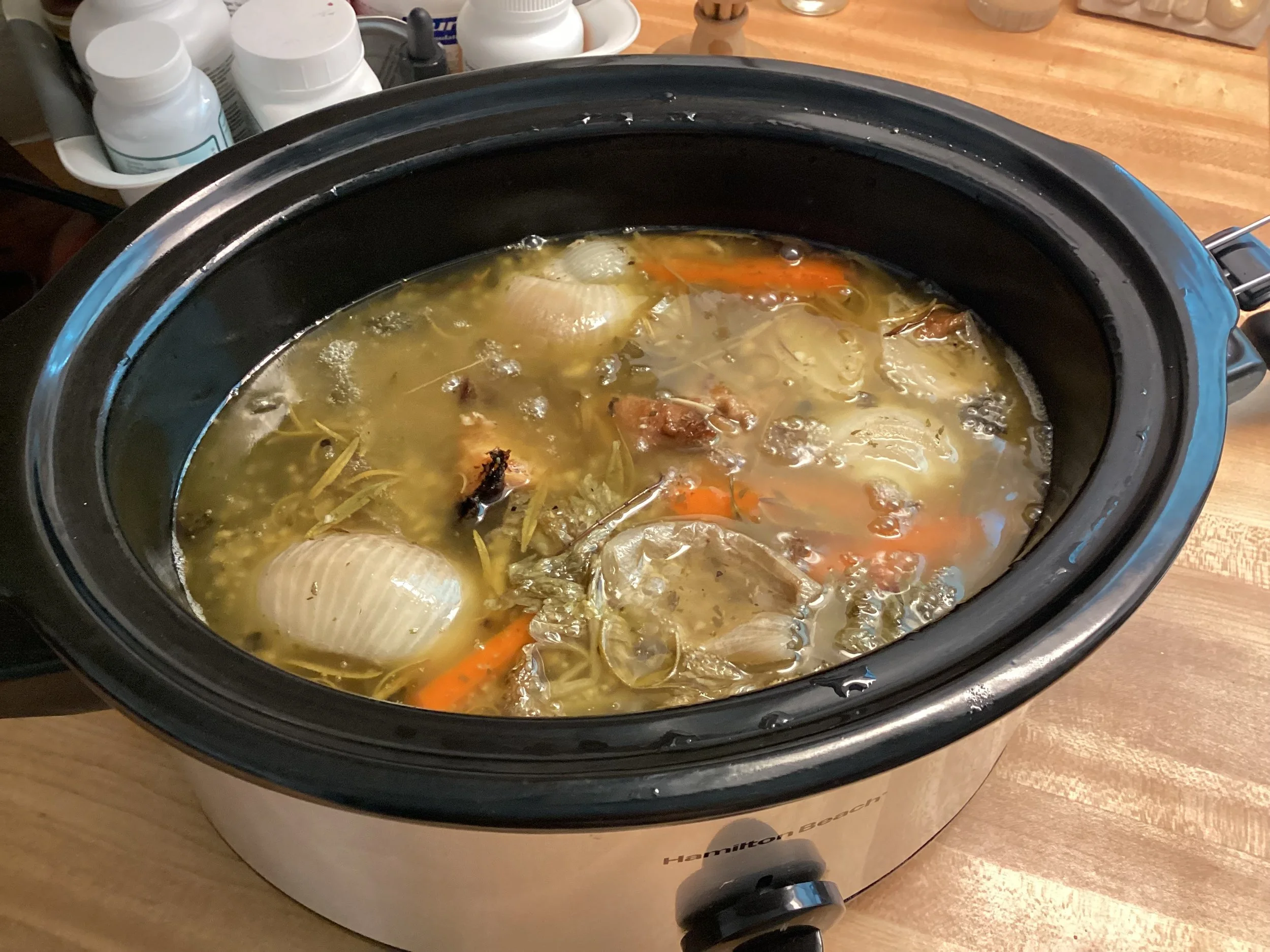
This slow cooker has been quietly working all day, just as my mother's pot did many years ago.
The difference?
Today we understand a little more about why this simple soup has nourished families for centuries.
From a Western perspective, long-simmered broth releases collagen, gelatin, amino acids, and minerals that may support healthy joints, digestion, connective tissue, and overall wellness. It is warm, easy to digest, and comforting, especially when we're feeling run down.
Chinese Medicine has appreciated these qualities for thousands of years.
We often say that a rich broth helps nourish our Jing (pronounced "jing").
But what exactly is Jing?
I like to explain it this way...
Imagine you are born with a savings account.
Some people begin life with a little more, some with a little less, but all of us spend from that account throughout our lives.
Every sleepless night...
Every period of prolonged stress...
Every illness...
Every year that passes...
We make withdrawals.
The good news is that while we can't completely replace our original savings, we can help protect it and nourish what we have.
Rest.
Quality sleep.
Gentle exercise.
Meaningful relationships.
Time in nature.
And foods that truly nourish us.
A slow-cooked beef broth is one of those foods.
It doesn't perform miracles overnight, but it provides deep nourishment that supports the body over time—especially as we grow older.
Perhaps that's why our mothers and grandmothers instinctively made soup whenever someone was sick, exhausted, or simply needed a little extra care. Merci Maman!
They may not have called it collagen.
They may never have heard the word Jing.
But somehow...
They knew.
Sometimes, the oldest traditions turn out to be the wisest. The bones were free from our butcher back then. now that this is become so popular, I paid $5 a pound yesterday…
One thing I'd like to add...
Soup isn't just for cold winter days.
One of my favorite ways to enjoy this broth is to warm up a mug and simply sip it throughout the day. It's comforting in the morning, nourishing after exercise, and a wonderful afternoon pick-me-up instead of reaching for another cup of coffee. I actually bring a thermos at my pickleball games.
In Chinese Medicine, warm foods are generally considered easier to digest and more supportive of our digestive "fire." So whether it's January in Canada or a warm Florida afternoon, a cup of homemade broth can be a simple act of self-care.
Sometimes, nourishing ourselves doesn't have to be complicated.
Sometimes...
It's just a cup of homemade broth.
Made with patience.
Made with love.
Just as my mother used to make it.
Merci, Maman! ❤️
Et bon appétit!
To Your Health!
Danièle Saint-Cyr
St. Armands Acupuncture & Wellness