
The Ancient Art of Fermentation: A Gift to Your Gut and Your Health
By Danièle Saint-Cyr, DOM, AP, LAc
One of my favorite hobbies in the kitchen has nothing to do with complicated recipes.
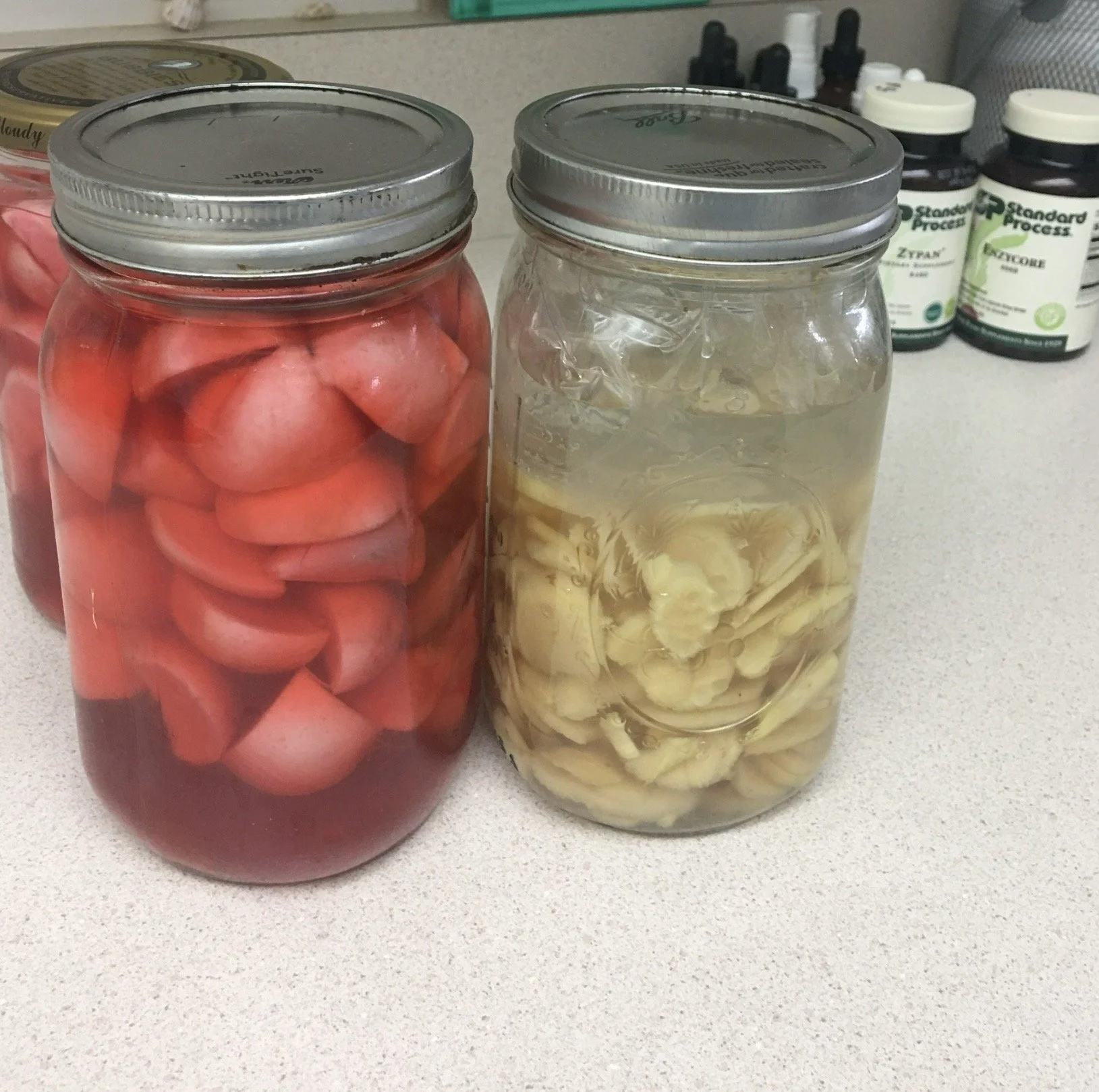
I love fermenting vegetables.
If you visit my kitchen, you'll often find jars of colorful radishes, carrots, garlic, cabbage, cucumbers, or other seasonal vegetables quietly transforming into delicious, probiotic-rich foods. There is something deeply satisfying about watching nature do the work.
Fermentation has been practiced for thousands of years in cultures around the world, not only to preserve food, but also because people recognized how good it made them feel.
Why fermented vegetables are so special
Unlike vinegar pickles, naturally fermented vegetables are alive.
During fermentation, beneficial bacteria (primarily Lactobacillus species) multiply and create a healthy environment that helps preserve the food while producing valuable compounds for our digestive system.
These beneficial bacteria are often called probiotics.
A healthy gut microbiome plays an important role in many aspects of health, including:
Supporting digestion
Helping maintain a balanced immune system
Producing certain vitamins
Improving nutrient absorption
Supporting the health of the intestinal lining
Contributing to overall well-being
As someone who practices both Traditional Chinese Medicine and Functional Nutrition, I often remind my patients that health begins in the digestive system.
A Traditional Chinese Medicine perspective
In Traditional Chinese Medicine, the digestive system, especially the Spleen and Stomach, is considered the foundation of health.
When digestion functions well, the body is better able to transform food into Qi (energy), Blood, and nourishment for every organ.
Fermented vegetables can be a wonderful addition to many people's diets because they provide natural enzymes, beneficial bacteria, and wonderful flavors that encourage healthy digestion.
However, as I often tell my patients:
There is no single food that is perfect for everyone.
Your constitution, digestive strength, medical history, and current health condition all matter.
Someone with a strong digestive system may thrive on fermented foods, while another person with significant digestive irritation or certain gastrointestinal conditions may need smaller amounts—or may need to avoid them temporarily.
This is one reason personalized nutrition is so important.
My favorite vegetables to ferment
Some of my favorites include:
Radishes
Carrots
Garlic
Cabbage
Cauliflower
Green beans
Cucumbers
Each batch develops its own personality depending on the vegetables, herbs, spices, and time allowed to ferment.
It's a little science...
A little art...
And a lot of patience.
Small amounts can make a difference
You don't need large servings.
Even a few forkfuls alongside a meal can add flavor and beneficial bacteria to your diet.
As with most things in nutrition, consistency is often more important than quantity.
Food as part of a healthy lifestyle
I believe that true wellness isn't found in one miracle supplement or one perfect diet.
It comes from the small choices we make every day.
Choosing whole foods.
Moving our bodies.
Managing stress.
Sleeping well.
Connecting with others.
And yes... sometimes enjoying a crunchy homemade fermented radish!
These simple traditions have nourished generations before us, and they still have much to offer today.
What about you?
Have you ever tried making your own fermented vegetables? I'd love to hear about your favorite recipes or fermentation adventures!